If you're looking for a CRM platform that meets the needs of your European sales team, you've probably come across two popular names: SuperOffice CRM and Lime CRM.
Both are trusted, home-grown solutions developed in Europe, built to support data privacy regulations like GDPR, and designed with the workflows of European businesses in mind.
But despite sharing some common values, SuperOffice and Lime CRM offer very different experiences when it comes to flexibility, customization, and day-to-day usability.
So how do you choose?
In this article, you’ll discover a side-by-side breakdown of the two platforms - from how they handle sales workflows to their strengths in customer service and marketing - so you can confidently choose the CRM that aligns with your goals.
Why choose a European CRM?
As more companies in Europe shift away from U.S.-based software providers, local CRM solutions are gaining traction for their GDPR compliance, regional support, and cultural fit.
Both SuperOffice CRM (Norway) and Lime CRM (Sweden) are built for European teams and trusted by thousands of mid-sized businesses across the region. But their approach to solving your sales challenges is different.
Let’s break it down.
SuperOffice CRM vs. Lime CRM: Head-to-head comparison
See how these two leading European CRMs compare on usability, features, and flexibility.
| Feature | SuperOffice CRM | Lime CRM |
| Origin | Norway | Sweden |
| Focus | B2B Sales, Marketing & Customer Service for your industry | Vertical-specific CRM (e.g. real estate, energy) |
| Ease of use | Intuitive interface with CRM Fast Track templates for rapid, guided setup | Clean UI, setup can require more consulting |
| Sales tools | Full pipeline, forecasting, and automation | Solid core tools, less out-of-the-box insight |
| Marketing | Built-in email marketing, automation, web forms | Add-ons or third-party integrations |
| Customer service | Case management and shared inbox | Basic, often customized per industry |
| Customization | High flexibility and configuration options without developer support | Highly customizable, with consulting support |
| Mobile app | Full-featured mobile CRM | Mobile available, not as advanced |
| AI & automation | Built-in AI across all modules | Limited AI features |
| Integrations | Built-in integrations to ERP, Email (Outlook, Gmail), Microsoft 365, Power BI & more | Strong ERP and industry tool integrations |
| GDPR compliance | Fully GDPR-compliant with EU hosting and ISO-certified controls | GDPR compliant with support for local data storage and customer consent |
| Deployment | Cloud or on-premise | Cloud or on-premises |
| Support | Local-language onboarding and support, local sales teams, strong partner network | Industry-specialist consultants |
| Pricing | Modular pricing, transparent tiers | Tiered pricing by industry |
Now that you’ve seen how the two platforms stack up, the next step is deciding which one aligns best with your sales team’s goals and the way you work.
Which CRM is right for your sales team?
Choose SuperOffice CRM if you want:
1. A fully integrated CRM for Sales, Marketing, and Service
SuperOffice CRM provides you with an integrated solution for sales, marketing, and customer service, all in one platform.
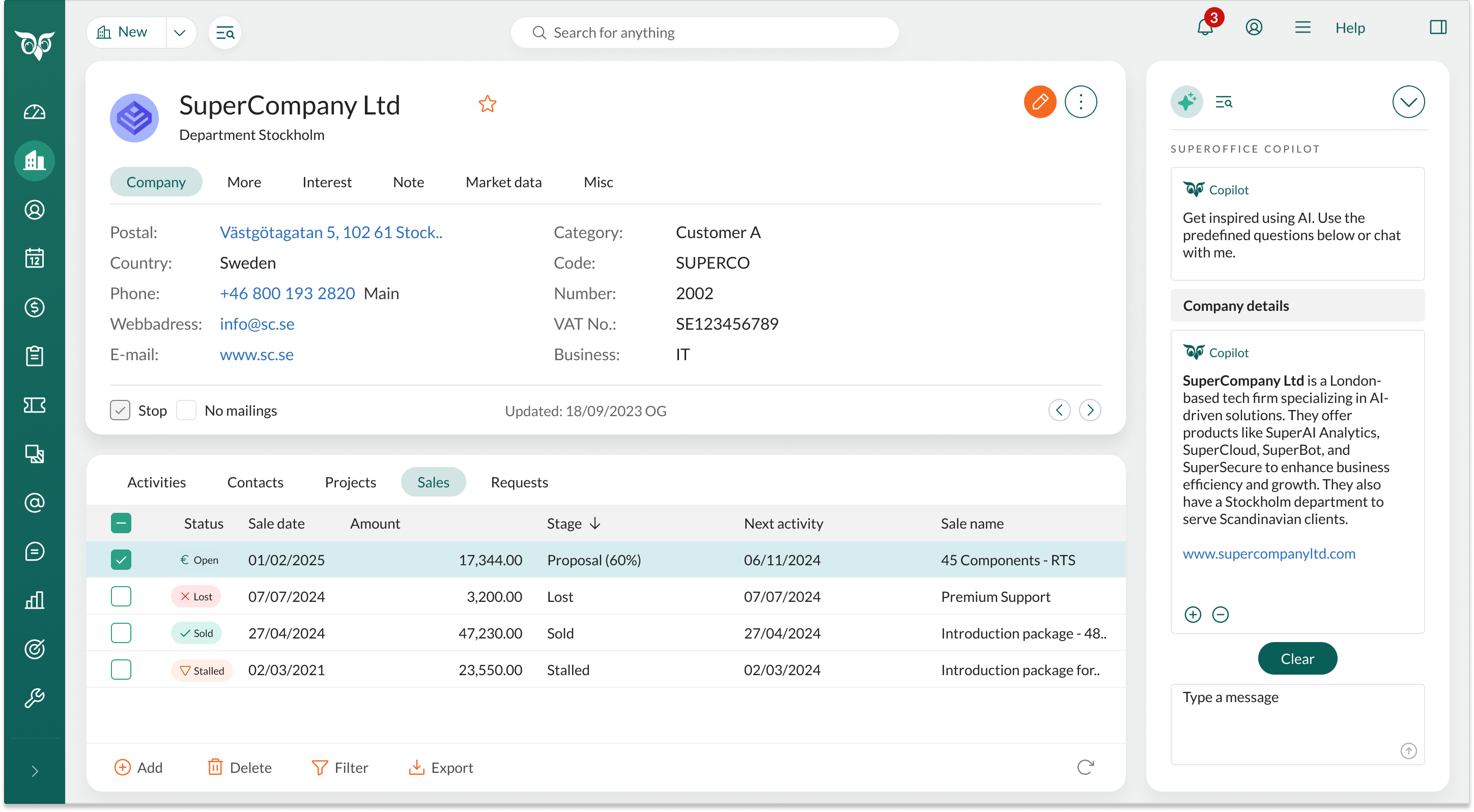
By centralizing customer data and streamlining communication, you enable your teams to collaborate seamlessly. With sales, marketing, and customer service all working with the same set of information, you ensure a consistent and personalized experience for your customers.
The result?
Higher efficiency, smoother workflows, and better customer satisfaction. You no longer need separate tools for each team, reducing silos and enhancing overall performance across departments.
2. A platform that’s easy to onboard and scale
SuperOffice CRM is built with usability in mind, allowing your team to quickly get up to speed with minimal training.
Its intuitive interface and simple setup process ensure fast adoption across your sales team, so you can start seeing the benefits right away.
As your business grows, SuperOffice CRM scales with you, allowing you to seamlessly add users, handle larger volumes of data, and manage more complex workflows without performance dips.
Whether you're expanding your team or operations, SuperOffice grows with you, providing a CRM that remains a valuable asset as your business evolves.
3. Tools that support scalable sales processes and smart execution
SuperOffice CRM is designed to help B2B sales teams stay organized, focused, and efficient throughout the entire sales cycle.
From managing complex pipelines to tracking every interaction in one place, SuperOffice makes it easy to move deals forward.
Built-in features like guided workflows and sales stages help teams follow a consistent process, while mobile access ensures your reps can stay productive on the go.
You can also integrate with ERP systems to give sales teams visibility into product availability, pricing, and customer history - right from within the CRM.
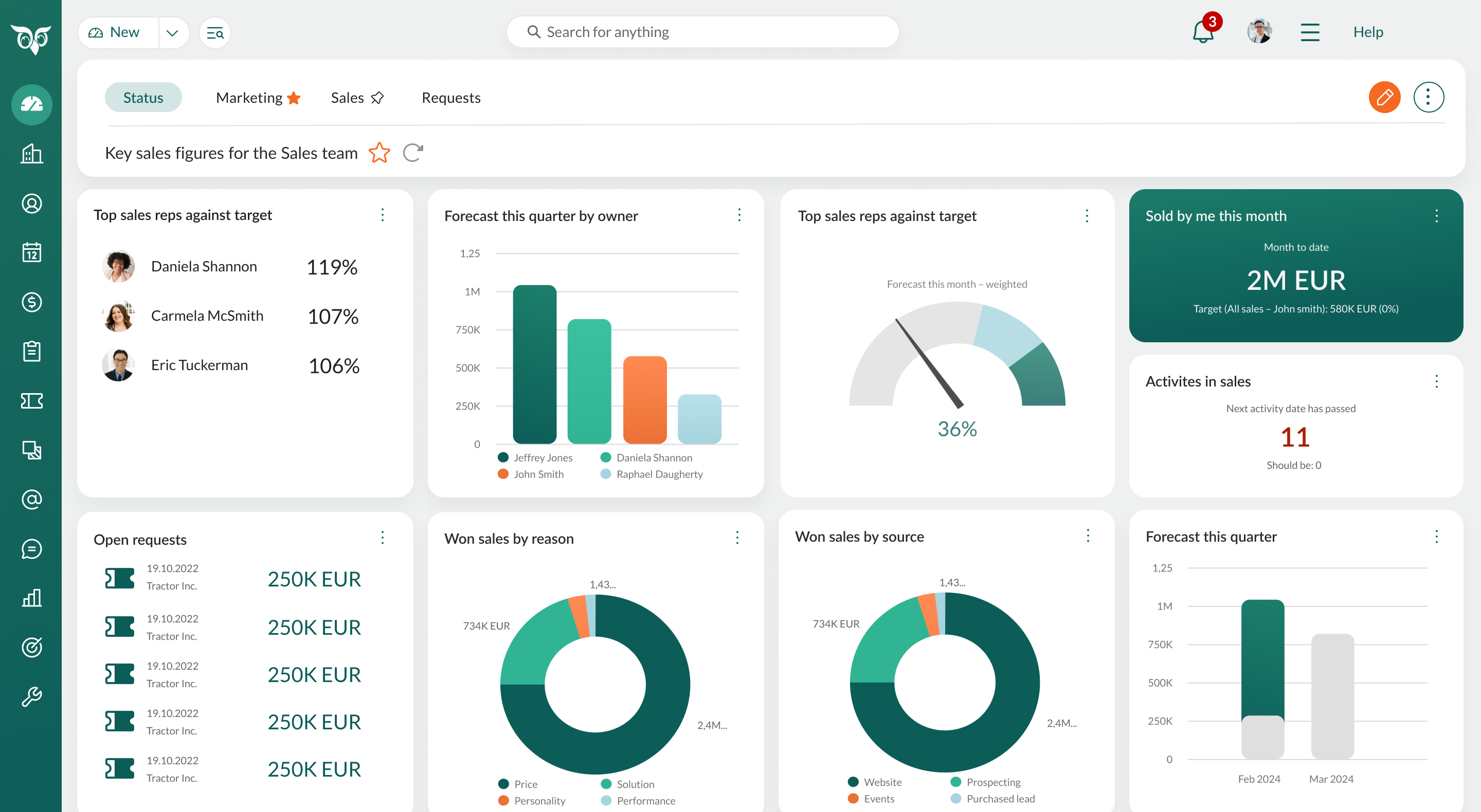
With SuperOffice CRM, you focus on what really matters - personalizing every interaction to build stronger relationships and increase your chances of closing deals.
Choose Lime CRM if you need:
1. A CRM designed to align with industry-specific workflows
Lime CRM is suited for businesses that prefer a CRM tailored to the needs of their industry.
Its approach centers around pre-built templates and structured configurations that reflect common workflows across a variety of sectors. This makes it a good choice for teams looking to streamline implementation with tools that are already aligned to their operational model.
Rather than starting from a blank slate, companies can leverage industry-informed modules to accelerate setup and adoption, with less need for customization in the early stages.
2. Heavy configuration for teams that want a guided setup
Lime CRM excels at providing deep customization, giving you the flexibility to create a CRM solution that truly matches your business needs.
For companies that prefer a guided setup approach, Lime CRM offers a configuration-heavy setup model, where much of the tailoring is done during implementation to reflect your workflows, processes, and business goals.
Whether it’s adjusting fields, modifying sales stages, or integrating with other software, Lime CRM works with you to create a solution that maximizes productivity and fits your way of doing business.
This level of customization helps ensure you get a CRM that’s as unique as your company, providing value from day one.
Whether it’s during onboarding, support, or day-to-day use, Lime CRM’s direct-service model ensures you’re working with a partner who understands your regional needs - helping your teams move faster, communicate clearly, and get the most out of your CRM investment.
Conclusion
Both SuperOffice and Lime are strong European CRM solutions - but the right fit depends on how your team works.
If you’re a mid-sized B2B sales organization looking for a CRM that helps you sell smarter, work faster, and collaborate better, SuperOffice CRM was built with you in mind.
From one-click reporting and custom dashboards to marketing automation and customer service tools, it’s your all-in-one platform for growth.
Ready to see it in action?
Book a demo of SuperOffice CRM and discover how it can help you build better customer relationships, streamline your pipeline, and drive more sales.