Launch of continuation fund marks next phase in SuperOffice and Axcel’s partnership, reinforcing long-term growth ambitions and continued value creation.
Oslo, Norway - SuperOffice, a leading CRM platform for small and medium-sized businesses across Europe, today announced that Axcel has closed a EUR 266 million continuation fund to extend its ownership and support of the company.
The new fund has acquired SuperOffice from Axcel VI, which initially invested in SuperOffice in 2020. The continuation fund has Carlyle AlpInvest as lead investor, alongside new and existing investors, Axcel partners and employees, as well as SuperOffice management team and employees.
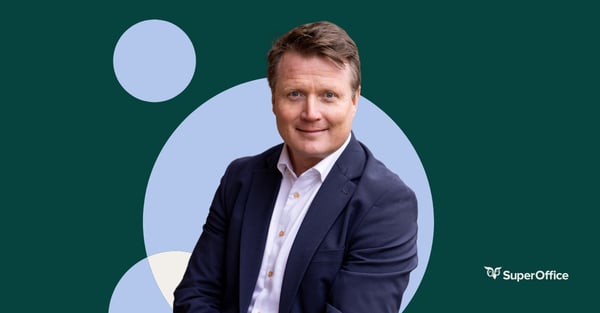
“This transaction is a strong testament to the confidence in our vision, people and momentum,” says Lars Engbork, CEO of SuperOffice. “With Axcel’s continued partnership- we are accelerating our growth journey, investing further in the success of our customers and advancing our product capabilities with more AI-powered features. In addition, we are expanding our go-to-market operations and actively pursuing strategic acquisitions that align with our customers’ evolving needs.”
Strong Results in first ownership cycle
Since Axcel’s original investment in 2020, SuperOffice has outperformed expectations -delivering double-digit organic growth and successfully transitioning customers from on-premise software to a modern, cloud-based SaaS model. Cloud ARR is now nearly three times higher than when Axcel first joined, and the company is on track to nearly triple cash EBITDA.
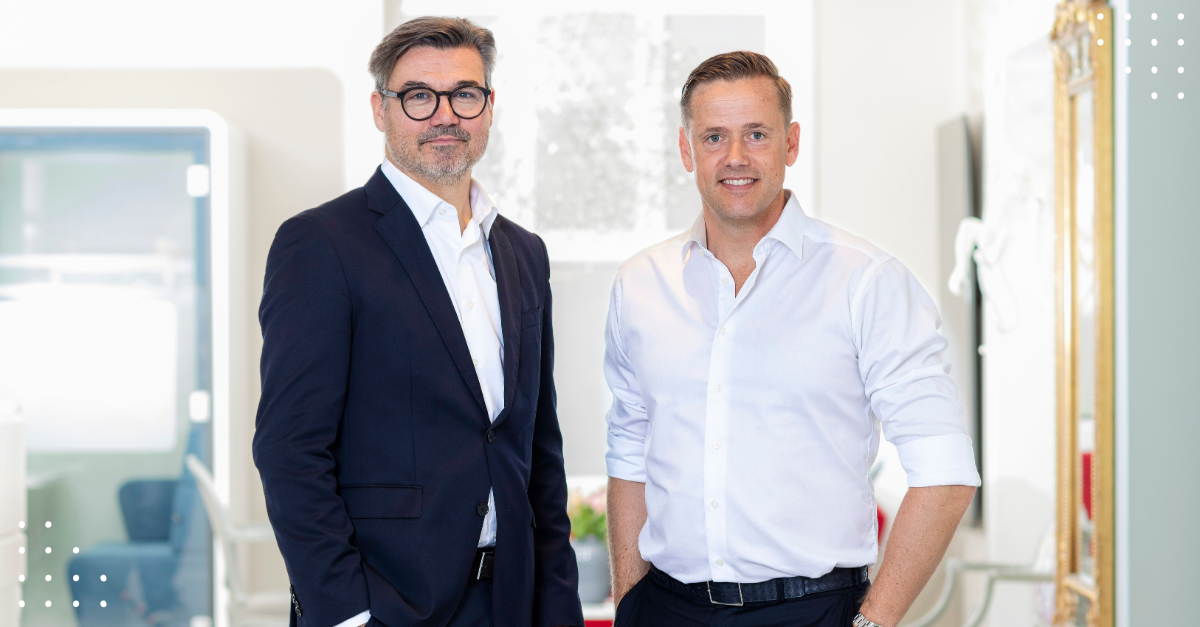
“A continuation fund is an attractive solution in this situation where we still have further value creation to do,” says Co-Managing Partner Christian Bamberger Bro. “We’re proud of the journey SuperOffice has been on - transitioning almost fully to the cloud, elevating its commercial efforts and significantly accelerating its growth. This transaction reinforces our commitment to SuperOffice and our confidence in its continued growth, driven by a combination of organic initiatives and targeted acquisitions.”
Focused trajectory for growth
With this renewed backing, SuperOffice has ambitious plans. This vision builds on the company’s strong performance to date, which has been fueled by continuous product innovation, significant improvements in user experience and the strengthening of AI-powered features. While growth will continue to be driven by momentum and market share gains from its core cloud CRM offering, an equally important focus will be on accelerating strategic acquisitions. The company plans to expand its platform by acquiring complementary solutions that support a broader range of customer-centric business processes -ensuring SuperOffice delivers even greater value across the full customer journey.
With a strong foundation and a clear vision, the company is well positioned to take the next leap forward and realize its ambition to become the most loved CRM platform by European businesses.
About SuperOffice
SuperOffice is a leading and trusted customer relationship management (CRM) platform for small and medium-sized businesses located in Norway, Sweden, Denmark, Germany, Netherlands and Switzerland. The SaaS company offers scalable and modular solutions, and enables businesses to manage all customer touchpoints across sales, marketing and services. In 1990 SuperOffice was founded in Norway, the HQ location. The company has offices in all the countries it serves, a customer support office in Lithuania, as well as international partners in the UK, Ireland and North America. Today, the company has almost 300 employees. For more information, visit www.superoffice.com.
For further information, please contact:
Lars Engbork, CEO
Phone: +45 22 69 28 68
Email: lars.engbork@superoffice.com
Ole Erlend Vormeland, CFO
Phone: +47 47 45 40 06
Email: oleerlend.vormeland@superoffice.com
Tish Gilbert, Head of Communications and Brand
Phone: +47 92 06 40 64
Email: tish.gilbert@superoffice.com
About Axcel
Founded in the Nordics, Axcel is a leading private equity firm investing across Northern Europe, with a focus on four sectors: Technology, Business Services & Industrials, Healthcare, and Consumer. With offices in Copenhagen, Stockholm, and Frankfurt, Axcel’s team leverages 30 years of experience in building market leaders through a collaborative mindset and a structured approach to value creation. The firm has raised seven funds with committed capital of more than EUR 4.1 billion from Nordic and international investors. Axcel currently owns 21 companies and has completed 74 platform investments, over 400 add-on acquisitions and 53 exits.
For further information, please contact:
Christian Bamberger Bro, Co-Managing Partner
Phone: +45 33 36 69 99
Email: cbb@axcel.com
Christian Schmidt-Jacobsen, Co-Managing Partner
Phone +45 33 36 69 99
Email: csj@axcel.com
Jesper Breitenstein, Head of Investor Relations
Phone: +45 27 80 76 75
Email: jbr@axcel.com
Maria Fiorini Lorenzen, Head of Communications
Phone +45 22 27 36 76
Email: mfl@axcel.com